
 Facebook
 X
X
 Pinterest
 Copy Link
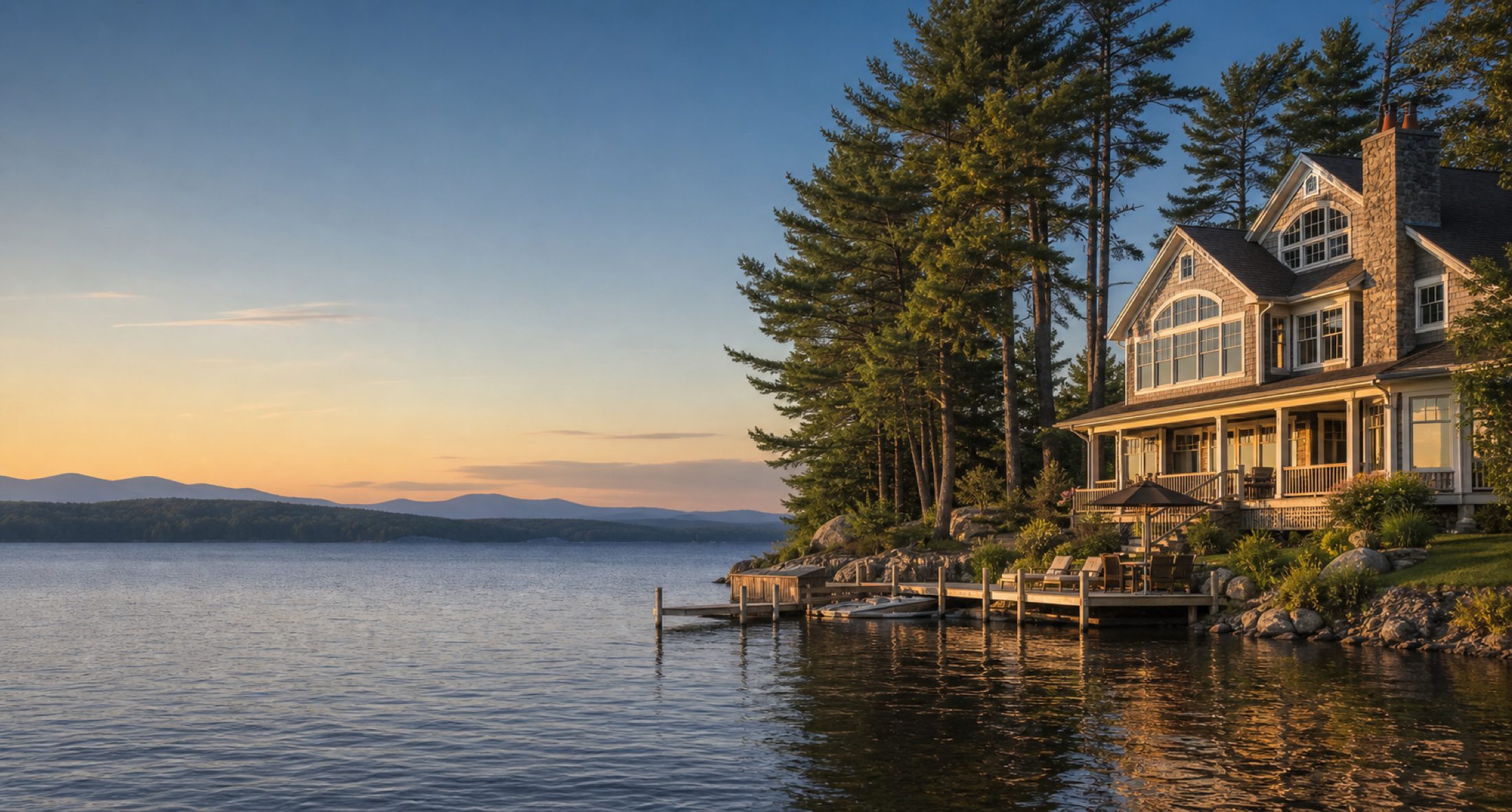
A New Hampshire lake home can be a peaceful retreat, a year-round residence or part of a long-term investment plan. It can also come with questions that do not arise in a typical home purchase. The shoreline, septic system, dock, water conditions, access rights, insurance and local rules can all affect how you use the property—and what it may cost to own.
Whether you are considering Lake Winnipesaukee, Winnisquam Lake, Newfound Lake, Lake Sunapee, Ossipee Lake, Squam Lake or a smaller New Hampshire pond, look beyond the view before writing an offer. As a New Hampshire REALTOR® and real estate investor, I recommend starting with these ten questions.
Understand the waterfront and essential systems
1. Do I own the waterfront, or do I have access to it?
“Waterfront,” “deeded water access” and “shared beach rights” are not interchangeable. Ask what the deed conveys, how much frontage belongs to the property and whether a survey identifies the boundaries. If access is shared, review the recorded easements or association documents. Confirm where you may walk, swim, launch a kayak, park or keep a boat. A beautiful lake view does not automatically include the legal right to use the shoreline.
2. What do we know about the septic system and drinking water?
Ask for the septic design, state approval, installation date, service history, pumping records and location of the tank and leach field. Certain waterfront transfers can involve additional septic-system steps, so determine early which documents or evaluations apply to the property. The New Hampshire Department of Environmental Services waterfront property fact sheet is a useful starting point. For a private well, discuss appropriate water-quality and flow testing with qualified professionals.
3. Is the dock permitted, and is it included in the sale?
Never assume an existing dock, boat lift, swim raft, boathouse or mooring is automatically approved or included. Request available permits, registrations, notifications, plans and maintenance records. Confirm whether a dock is seasonal or permanent, who removes and stores it and whether its placement fits within the property’s boundaries. If you hope to replace, enlarge or relocate a waterfront structure, investigate feasibility before treating that project as part of the property’s future value.
Look beyond the summer showing
4. Can I make the changes I envision?
Waterfront renovations can involve municipal zoning as well as state shoreland, wetlands and septic requirements. Before assuming you can add a bedroom, expand the footprint, remove vegetation, build a patio or create a new path to the water, ask the town and the appropriate state agencies what may be allowed. An attractive concept is not the same as an approved project. Make your offer based on the property as it exists unless your planned use has been properly investigated.
5. What is the water like throughout the season?
Visit at different times if the schedule allows. Look at water depth near the dock, bottom conditions, prevailing wind, boat traffic, wakes, neighboring activity and how sunlight reaches the property. Ask about seasonal water-level changes and known invasive aquatic plants. The NHDES Healthy Swimming Mapper, lake monitoring reports and local lake associations can provide context about advisories and water-quality history.
6. Is the home truly suitable for year-round use?
A property marketed as a “camp” may have different insulation, plumbing, heating, foundation and access considerations than a year-round home. Ask whether the road is publicly maintained, privately maintained or seasonal. Who plows it, and how is that cost shared? Inspect the heat source, pipes, crawlspace, roof, drainage and winterization history. Verify internet and cellular service at the property instead of relying only on a coverage map.
7. What will insurance and financing require?
Water proximity, flood exposure, private roads, seasonal construction, older systems and property condition can influence financing or insurance. Contact your lender and insurance professional before the offer deadline when possible. Review the property through the FEMA Flood Map Service Center, but remember that a map is only one part of a complete risk review. Ask for actual quotes rather than estimating coverage from a conventional inland home.
Check the rules, costs and long-term value
8. Are there association or lake-use rules?
If the property includes an association, shared road, private beach or common dock, request the governing documents, current budget, meeting minutes, fees and information about planned projects. Ask about boats, trailers, pets, parking, guests, rentals, docks and shoreline storage. Also check state and local boating restrictions for the specific waterbody. The right community is the one whose rules support how you genuinely plan to enjoy the property.
9. What is the complete annual cost?
Build a lake-home budget that extends beyond the mortgage and taxes. Possible expenses include private-road maintenance, dock installation and removal, association dues, well and septic service, tree work, shoreline care, heating, snow removal, insurance and seasonal opening or closing. If rental income is part of your plan, verify municipal and association rules and use conservative estimates for occupancy, management, cleaning, repairs and off-season demand.
10. Will this property still make sense when I sell?
An investor’s perspective is useful even when you are buying for personal enjoyment. Consider the clarity of the access rights, usability of the shoreline, road quality, parking, bedroom capacity, system condition, privacy, sun exposure and appeal across multiple seasons. A rare view is valuable, but unresolved permits, unclear frontage, limited financing options or expensive infrastructure can narrow the future buyer pool. Understand both the emotional appeal and the practical resale story.
Turn better questions into a stronger offer
A strong lake-home offer is not simply the highest price. It reflects the property’s documentation, condition, competition and the buyer’s priorities. Depending on the situation, appropriate professional inspections, document review, financing preparation and clearly written contingencies may help you make a confident decision. Your REALTOR®, attorney, lender, insurer, inspectors, septic professionals and relevant government offices each play a different role in that process.
Ready to explore New Hampshire lake homes? Search available properties, learn more about my approach, or contact me for inclusive, practical guidance tailored to your goals—whether you are buying a first retreat, a year-round home, a multigenerational gathering place or an investment property.
This guide is for general information only, not legal, tax, lending, insurance, environmental or engineering advice. Confirm property-specific requirements with the appropriate qualified professionals and public agencies.


